
Forensic Toxicology Expert Witnesses
Source and vet a forensic toxicology expert witness for blood alcohol, drug impairment, and postmortem cases with a clear checklist of methods, credentials, and red flags.
The buyer problem
Cases that turn on a substance in a person's body, alcohol, prescription drugs, illicit drugs, or a combination, force counsel and claims teams to interpret laboratory numbers they cannot read alone. A concentration reported by a lab does not by itself establish impairment, timing, dose, or cause of death, and opposing counsel will exploit any gap between the number and the conclusion drawn from it. Buyers need an expert who can explain what the toxicology does and does not support, and who will hold that line under cross-examination.
What a forensic toxicology expert does
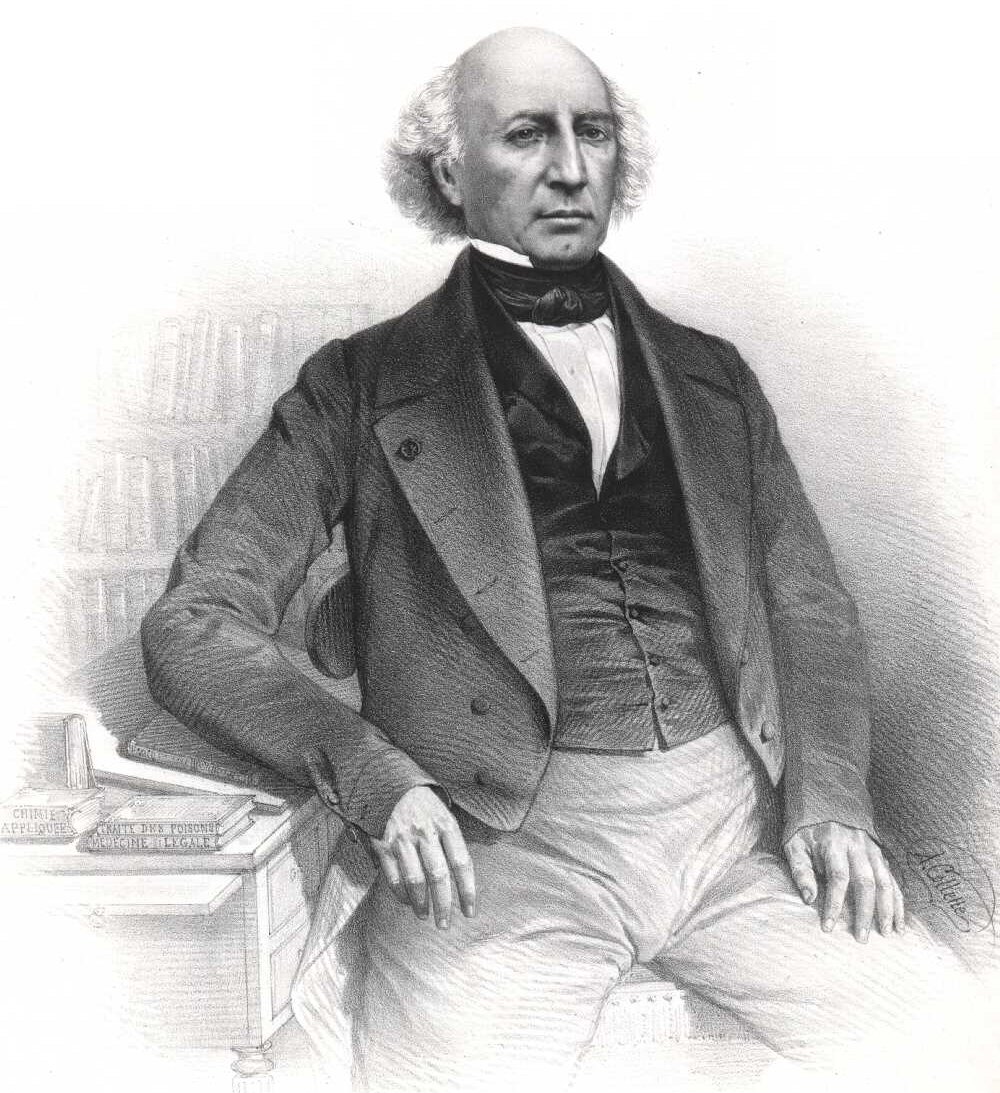
A forensic toxicologist interprets the presence and concentration of alcohol, drugs, and poisons in blood, urine, and tissue, and explains what those findings mean for questions like impairment, dose, timing of use, and contribution to injury or death. The discipline traces to Mathieu Orfila, often called the father of toxicology, who established that poisons could be detected and their effects reasoned about systematically. In litigation the expert reviews lab data, chain of custody, analytical methods, and case facts, then forms opinions on issues such as whether a driver was impaired, whether a drug level was therapeutic or toxic, or whether postmortem redistribution altered a reported concentration. Scope ranges from a records review and written report to deposition and trial testimony.
Methods and techniques
- Blood alcohol concentration (BAC) measurement and interpretation, including headspace gas chromatography
- Retrograde extrapolation of alcohol concentration back to the time of an incident, with stated assumptions and limits
- Gas chromatography-mass spectrometry (GC-MS) for confirmatory drug identification
- Liquid chromatography-tandem mass spectrometry (LC-MS/MS) for quantitation of drugs and metabolites
- Immunoassay screening versus confirmatory testing, and the difference between the two
- Postmortem redistribution assessment, accounting for site-dependent and time-dependent concentration changes
- Interpretation of therapeutic, toxic, and lethal ranges relative to tolerance and polypharmacy
- Chain-of-custody and specimen-integrity review, including stability and preservative effects
What to verify before you retain
- Board certification. Ask whether the expert holds American Board of Forensic Toxicology (ABFT) certification and confirm current standing directly, rather than relying on a CV line.
- Laboratory accreditation. Confirm whether the underlying analytical work was performed by a lab accredited by ANAB (which absorbed the former ASCLD/LAB program) or an equivalent body, and to which standard.
- Analytical scope. Verify the expert actually interprets the specific matrix and analyte at issue (for example postmortem blood versus urine, or a novel synthetic drug) rather than a general toxicology background.
- Independence from the testing lab. Establish whether the interpreting expert is independent of the lab that generated the data, and disclose any relationship.
- Testimony history. Request a recent list of cases with testimony, including for which side, and any instance where an opinion was limited or excluded.
- Publication and peer standing. Check membership in recognized bodies such as the Society of Forensic Toxicologists (SOFT) or the American Academy of Forensic Sciences (AAFS), and any peer-reviewed work relevant to the issue.
Questions to put in your RFP
- What is the specific question you are being asked to answer, and what data do you require to answer it reliably?
- What analytical methods produced the results you will interpret, and were screening results confirmed by a mass-spectrometry method?
- If retrograde extrapolation is involved, what assumptions do you make about absorption, elimination rate, and last drink or dose, and how do those assumptions affect your conclusion?
- For a postmortem case, how do you account for postmortem redistribution and specimen collection site?
- What is the reported measurement uncertainty or margin of error for the concentrations you rely on?
- Can you distinguish impairment from mere presence of a substance, and what is the basis for any impairment opinion?
- What alternative explanations for the findings have you considered and ruled out?
- Have any of your opinions in this area previously been limited or excluded, and if so, on what grounds?
- What is your estimated timeline and fee structure for records review, report, deposition, and trial?
Skip the cold search. Send this scope to us and we route it toward qualified forensic toxicology experts.
Request expertsRed flags
- States a firm impairment conclusion from a concentration alone, without addressing tolerance, timing, or individual variability
- Uses retrograde extrapolation without disclosing its assumptions or acknowledging where it breaks down
- Treats a presumptive immunoassay screen as a confirmed result, or ignores postmortem redistribution for a single postmortem level
- Testifies far outside the substance, matrix, or subfield of their actual training
- Will not produce a testimony history or is evasive about prior limitation or exclusion of opinions
- Offers opinions with no stated measurement uncertainty or error range
Typical case types
Standards and credential bodies
Bodies referenced in this discipline. Listed for context; they do not endorse this index or any provider. Verify any credential directly with the issuing body.
- ABFT
- American Board of Forensic Toxicology. Certifies individual forensic toxicologists and accredits toxicology laboratories in the United States.
- SOFT
- Society of Forensic Toxicologists. US professional society; publishes guidelines and consensus recommendations for forensic toxicology practice.
- AAFS
- American Academy of Forensic Sciences. Multidisciplinary US forensic science membership organization with a toxicology section.
- ANAB
- ANSI National Accreditation Board. Accredits forensic testing laboratories; absorbed the former ASCLD/LAB accreditation program.
- NIST
- National Institute of Standards and Technology. Federal body supporting forensic science standards and measurement science, including OSAC subject-area work.
Pioneers of forensic toxicology
Notable scientists associated with this field. Sourced from Wikipedia and Wikidata.
Forensic Toxicology: buyer FAQ
What is the difference between a forensic toxicologist and a forensic pathologist?
A forensic pathologist examines the body to determine cause and manner of death, often through autopsy. A forensic toxicologist interprets the chemistry, what substances are present and at what concentrations, and what that means. In a death case the two disciplines frequently work in parallel, and buyers sometimes need both.
Can a toxicology expert say a driver was impaired based on a blood level?
Not from a number alone. Impairment depends on factors such as tolerance, timing of use, individual response, and the substance involved. A careful expert explains what the concentration supports and where the evidence stops, rather than equating presence with impairment. This is buyer education, not legal or admissibility advice.
What is postmortem redistribution and why does it matter?
After death, some drug concentrations change depending on how long after death and where in the body the specimen was collected. A single postmortem blood level can therefore over- or under-state what was present at the time of death. An expert should address this rather than treat one postmortem number as fixed.
What is retrograde extrapolation?
It is the practice of estimating a person's alcohol or drug concentration at an earlier time, such as the moment of a crash, from a later measurement. It rests on assumptions about absorption and elimination that do not hold in every case, so a credible expert states those assumptions and their limits.
How do we confirm an expert's credentials?
Ask directly about American Board of Forensic Toxicology (ABFT) certification and confirm current standing, check the accreditation of the lab that produced the data, and request a recent testimony history. Verify these independently rather than relying on the CV.