
Trace Evidence Expert Witnesses
Source a trace evidence expert witness who can analyze fibers, glass, paint, hair, and gunshot residue, and explain the limits of each method under scrutiny.
The buyer problem
Trace evidence sits at the center of many disputes, yet its reliability varies sharply by material and method. A buyer has to find an examiner who can do the bench work, place a transfer in context using the Locard exchange principle, and state plainly where an association is strong and where it is only class-level or genuinely contested. Choosing the wrong expert can leave a case resting on an overstated match that does not survive cross-examination or a challenge to admissibility.
What a trace evidence expert does
A trace evidence expert examines the small, transferable materials that move between people, objects, and scenes when they come into contact, the practical expression of Edmond Locard's exchange principle that every contact leaves a trace. Typical work covers textile fibers, glass fragments, paint, and hair, and often extends to gunshot residue, soil, tape, and other particulate. The expert collects or reviews recovered material, characterizes it with microscopy and instrumental methods, compares questioned samples against known references, and reports the significance of any association along with its limits. Their role is analysis and interpretation, not deciding guilt, liability, or admissibility.
Methods and techniques
- Stereomicroscopy and polarized light microscopy (PLM) for fiber identification and morphology
- Microspectrophotometry (MSP) for fiber and paint color comparison
- Fourier-transform infrared spectroscopy (FTIR) for polymer, fiber, and paint chemistry
- Refractive index measurement of glass by the GRIM (Glass Refractive Index Measurement) hot-stage method
- Elemental analysis of glass and paint by SEM-EDS, ICP-MS, or LA-ICP-MS
- Scanning electron microscopy with energy-dispersive X-ray (SEM-EDS) for gunshot residue particle characterization (lead, barium, antimony)
- Pyrolysis gas chromatography-mass spectrometry (Py-GC-MS) for paint binders and polymers
- Comparison microscopy and, where appropriate, mitochondrial DNA referral for hair examination
What to verify before you retain
- Bench experience with the specific material. Confirm hands-on casework in the exact trace type at issue (fiber, glass, paint, hair, or gunshot residue). Competence in one does not transfer automatically to another.
- Laboratory accreditation history. Ask where the expert performed casework and whether that lab held ISO/IEC 17025 accreditation through ANAB or the legacy ASCLD/LAB program during their tenure.
- Method validation and proficiency testing. Verify that the methods relied on are validated, that the expert has current or recent proficiency-test participation, and ask about any documented errors or corrective actions.
- Instrument access and analytical scope. Confirm the expert or their lab actually has the instrumentation the opinion requires (for example LA-ICP-MS for glass elemental comparison), rather than relying on visual or class-level comparison alone.
- Position on contested methods. Ask directly how the expert frames microscopic hair comparison and gunshot residue interpretation, given documented reliability concerns and transfer and contamination risks.
- Chain of custody and contamination controls. Verify that recovery, packaging, and handling followed anti-contamination protocols, since trace material is easily transferred, lost, or introduced after the fact.
- Prior testimony and challenges. Request a testimony list and check for any rulings that limited or excluded the expert's opinions, and how their conclusions were scoped.
Questions to put in your RFP
- Which specific trace materials have you personally examined in casework, and roughly how recently for each?
- Were the laboratories where you worked accredited to ISO/IEC 17025, and by which body?
- What analytical methods and instruments would you apply to the material in this matter, and which are available to you directly?
- How do you express the strength of an association, and do you use class characteristics, individualization language, or a likelihood framework?
- How do you address microscopic hair comparison reliability and, where relevant, the need for mitochondrial DNA confirmation?
- For gunshot residue, how do you account for secondary transfer, environmental contamination, and time since discharge?
- Can you provide a current CV, fee schedule, proficiency-test history, and a list of prior testimony including any exclusions or limitations?
- What documentation, photographs, spectra, and case notes will you produce to support your conclusions?
- Have any of your opinions ever been excluded or restricted by a court, and on what basis?
Skip the cold search. Send this scope to us and we route it toward qualified trace evidence experts.
Request expertsRed flags
- States a definitive individual match on fiber, glass, paint, or hair evidence, which is generally class-level and cannot identify a unique source
- Presents microscopic hair comparison as conclusive without acknowledging documented reliability problems or the role of mitochondrial DNA
- Treats gunshot residue as proof a person fired a weapon, ignoring transfer, contamination, and background presence
- Claims broad expertise across every trace type with no material-specific casework to support it
- Cannot produce validation records, proficiency-test history, or accreditation for the lab where the work was done
- Uses certainty language such as 100 percent, match, or unique without a stated basis and without describing method limits
Typical case types
Standards and credential bodies
Bodies referenced in this discipline. Listed for context; they do not endorse this index or any provider. Verify any credential directly with the issuing body.
- ASTM
- ASTM International. Committee E30 publishes consensus standards for forensic trace disciplines including fibers, glass, and paint.
- OSAC
- Organization of Scientific Area Committees for Forensic Science. NIST-administered body whose materials subcommittees develop and register standards; successor to the earlier scientific working groups.
- NIST
- National Institute of Standards and Technology. Federal metrology institute supporting forensic method validation, reference materials, and OSAC.
- ANAB
- ANSI National Accreditation Board. Accredits forensic laboratories to ISO/IEC 17025; absorbed the legacy ASCLD/LAB program.
- AAFS
- American Academy of Forensic Sciences. Professional membership organization with a Criminalistics section covering trace evidence practitioners.
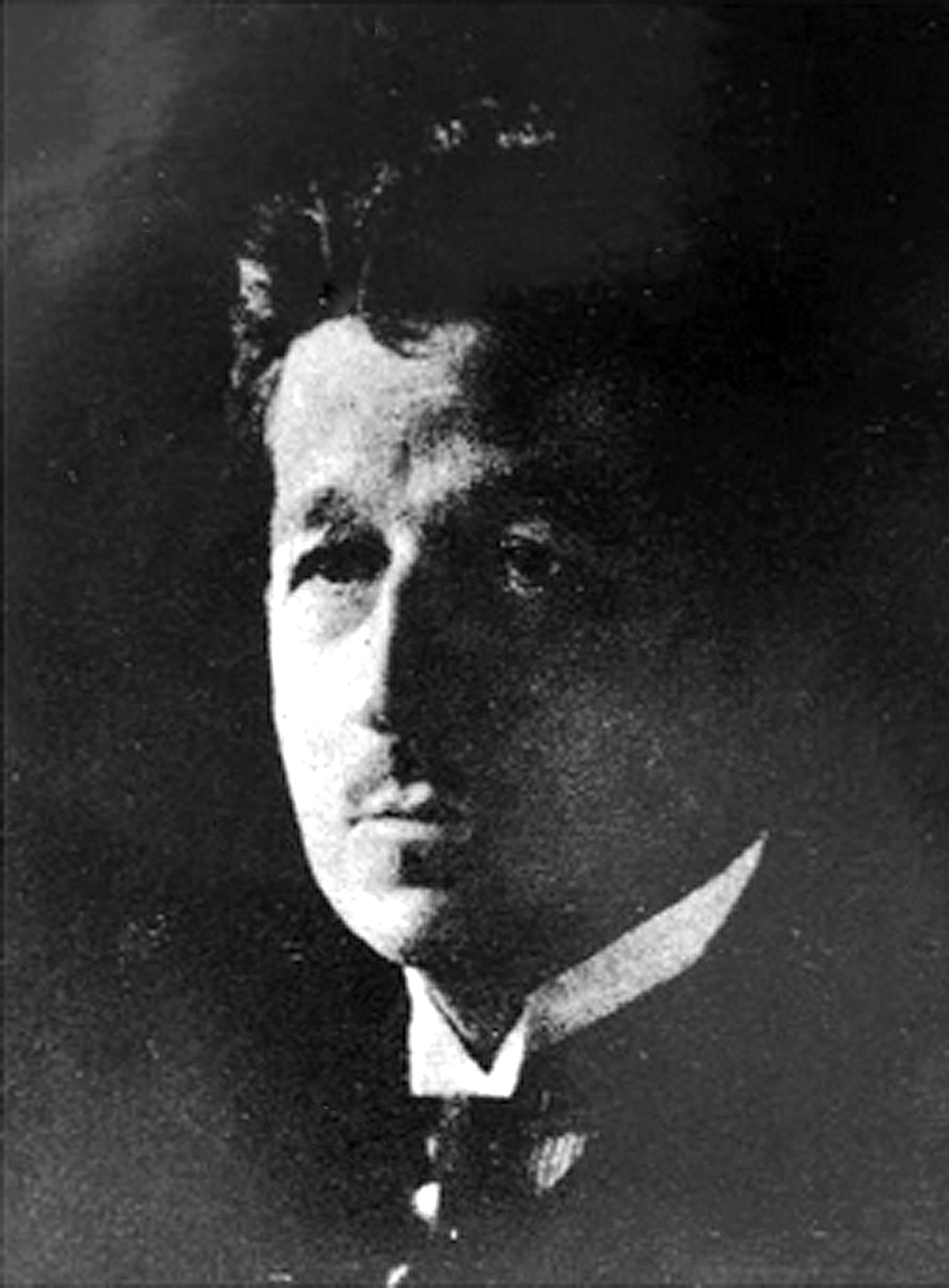
Pioneers of trace evidence
Notable scientists associated with this field. Sourced from Wikipedia and Wikidata.

From the journal
Deep dives for trace evidence
Mechanism-first guides on cross-examination, chain of custody, and procurement for this discipline.
Trace Evidence: buyer FAQ
What is the Locard exchange principle and why does it matter here?
It is the founding idea of trace evidence, attributed to Edmond Locard, that every contact between two surfaces leaves a mutual transfer of material. It matters because a trace expert's job is to detect that transferred material and assess whether, and how strongly, it associates a person or object with a scene.
Can a trace expert say a fiber or hair came from a specific source?
Generally no. Fibers, glass, paint, and hair carry class characteristics that place a sample within a group of possible sources, not to one unique origin. A credible expert describes the strength of an association and its limits rather than claiming an individual match. DNA analysis, when available, is what can approach individualization for biological material.
How reliable is gunshot residue evidence?
SEM-EDS can characterize residue particles by their lead, barium, and antimony composition, which is well established. Interpretation is where care is needed, because residue can transfer secondarily, be introduced by the environment, and diminish over time. Ask how the expert accounts for those factors before relying on a conclusion.
Is microscopic hair comparison still considered valid?
It is contested. Federal reviews identified overstated hair comparison testimony in past cases, and microscopy alone cannot identify a unique individual. Many practitioners now treat microscopy as a screening step and rely on mitochondrial DNA for stronger association. Confirm how your candidate frames this.
What should we independently verify before retaining a trace expert?
Confirm material-specific casework, the accreditation status of the labs where they worked, method validation and proficiency testing, access to the required instrumentation, and any prior court rulings that limited their opinions. This page supports procurement decisions and is not legal advice.